





Common Issues and Optimization Strategies in PCBA Manufacturing: Key Paths to Improve Quality and Efficiency
Overview of Core Challenges in PCBA Manufacturing
PCBA production is a multi-stage, multi-process precision manufacturing process encompassing key steps such as SMT placement, DIP insertion, wave/reflow soldering, and testing/inspection. Industry statistics show that even in well-managed PCBA factories, the first-pass yield (FPY) typically ranges only between 85%-95%, meaning 5-15 out of every 100 boards require rework or scrapping. These quality fluctuations not only cause direct material losses but also lead to delayed deliveries and diminished customer trust.
The primary contradiction in modern PCBA manufacturing lies in two opposing trends: On one hand, electronic products are becoming increasingly miniaturized, high-density, and multifunctional, with complex packages like 0201 or even 01005 micro-components, 0.4mm pitch BGAs, and high-pin-count QFPs becoming standard. On the other hand, market demands for cost, reliability, and delivery speed are growing ever more stringent. This dual pressure presents unprecedented challenges to traditional manufacturing methods.
The cost impact of quality issues is often severely underestimated. A study of medium-sized PCBA factories revealed that rework costs due to soldering defects account for about 3-8% of total production costs, while hidden costs (such as brand reputation damage and customer loss) may be even higher. More concerning is that certain latent defects (like cold solder joints) may go undetected during factory testing, only manifesting after extended end-user operation, leading to expensive field failures and recall risks.

Understanding the classification and characteristics of PCBA manufacturing issues is fundamental to developing effective countermeasures. These problems can be broadly categorized into: soldering defects (e.g., cold joints, bridging), component issues (wrong parts, reversed polarity, missing components), PCB substrate problems (warpage, contamination, scratches), process control issues (improper temperature profiles, equipment parameter drift), and design-related defects (unreasonable pad design, poor layout). Each category has its unique formation mechanisms and solution paths, requiring manufacturing teams to possess systematic problem analysis and resolution capabilities.
Typical Soldering Issues and Solutions
Soldering quality is the cornerstone of PCBA reliability and the most problematic aspect of the manufacturing process. Statistics show that soldering-related defects account for over 60% of total PCBA defects. The complexity of soldering lies in its interdisciplinary nature—combining materials science, thermodynamics, and fluid dynamics—where even minor parameter deviations can lead to significantly different soldering results. Below we analyze the most common soldering defects and their solutions.
Cold Solder Joints appear as rough, dull connections with poor mechanical strength and high electrical resistance. These occur when solder fails to melt completely or properly wet the surfaces. Common causes include:
-
Insufficient reflow temperature or time
-
Contaminated or oxidized surfaces
-
Inadequate solder paste volume

Solder Bridging creates unintended connections between adjacent pins/pads, causing electrical shorts. This frequently occurs with fine-pitch components like QFPs and BGAs due to:
-
Excessive solder paste deposition
-
Component misalignment
-
Improper reflow profile
Tombstoning affects small chip components (resistors, capacitors) where one end lifts vertically during reflow. Contributing factors include:
-
Uneven pad sizes/thermal masses
-
Imbalanced solder volumes
-
Excessive temperature gradients
Solder Balling produces small spherical particles around joints, potentially causing shorts in high-density designs. Root causes involve:
-
Moisture in solder paste
-
Rapid heating during reflow
-
Poor stencil design
Component Placement and Alignment Challenges
Modern pick-and-place machines achieve remarkable precision, yet component-related defects persist—especially with ultra-miniature components (01005 sizes: 0.4×0.2mm) and fine-pitch packages (0.35mm BGAs). Placement accuracy must often stay within ±25μm, demanding exceptional equipment performance and environmental control.
Missing Components occur when devices fail to transfer from feeders to PCBs. Typical causes:
-
Nozzle clogging/wear
-
Feeder malfunctions
-
Incorrect component thickness settings

Misaligned Components deviate from intended positions, potentially causing soldering defects. Alignment errors stem from:
-
Inaccurate fiducial recognition
-
Mechanical wear in placement mechanisms
-
PCB support issues
Polarity Reversals particularly affect diodes, capacitors, and LEDs. Unlike other defects, reversed components may pass electrical tests yet fail in field operation. Prevention requires:
-
Feeder orientation verification
-
Polarity markings on PCBs
-
Vision system checks
PCB Substrate-Related Defects
The circuit board itself often contributes to manufacturing challenges. As designs push physical limits (thinner materials, tighter tolerances), substrate quality becomes increasingly critical.
PCB Warpage creates numerous assembly difficulties:
-
Inconsistent solder paste deposition
-
Placement inaccuracies
-
Post-reflow open connections
Warpage solutions involve:
-
Balanced copper distribution
-
Proper material selection
-
Controlled thermal profiles

The circuit board itself often contributes to manufacturing challenges. As designs push physical limits (thinner materials, tighter tolerances), substrate quality becomes increasingly critical.
PCB Warpage creates numerous assembly difficulties:
-
Inconsistent solder paste deposition
-
Placement inaccuracies
-
Post-reflow open connections
Warpage solutions involve:
-
Balanced copper distribution
-
Proper material selection
-
Controlled thermal profiles
Pad Lifting separates copper from the substrate, often during rework. Contributing factors:
-
Poor copper adhesion
-
Thermal stress concentrations
-
Excessive rework cycles
Contamination Issues range from flux residues to human oils, potentially causing:
-
Poor solderability
-
Electrical leakage
-
Long-term reliability failures
Process Control and Optimization
Effective manufacturing requires comprehensive process control systems that address multiple variables simultaneously.
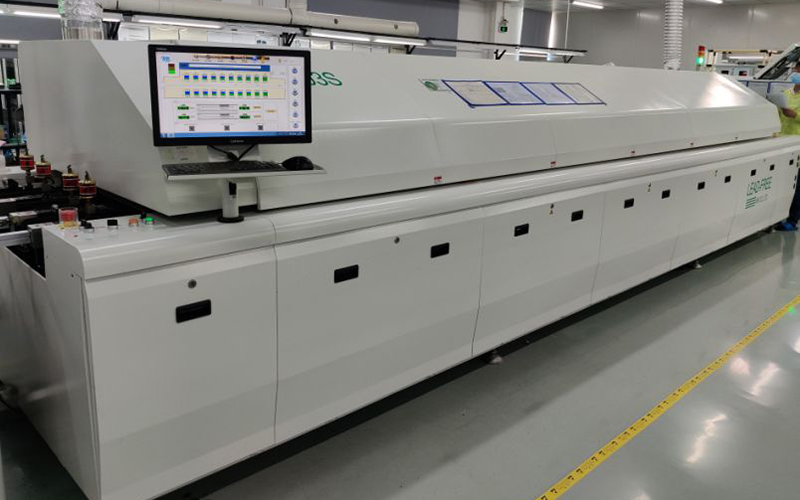
Reflow Profiling critically impacts soldering quality. Key parameters include:
-
Preheat rate (1.0-2.0°C/sec)
-
Soak time (60-120 sec)
-
Peak temperature (typically 230-250°C for lead-free)
Statistical Process Control (SPC) enables early detection of deviations:
-
Real-time monitoring of critical parameters
-
Control charts for key indicators
-
Automated alarm systems
Material Management prevents numerous issues:
-
Solder paste handling (refrigeration, thawing)
-
Moisture-sensitive device baking
-
FIFO (First-In-First-Out) inventory control
By implementing these strategies—combining technical solutions with robust process controls—manufacturers can significantly improve PCBA quality while reducing costs and lead times. The most successful operations adopt holistic approaches that address design, materials, equipment, and human factors simultaneously.